IPL Franchise Valuation Markers After the RCB Sale and Temasek Signal
Three sourced numbers now sit on the same table: a $1.8 billion franchise sale, an $18.5 billion league valuation citation, and a $42 billion India book from a state investor that has finally said it wants into IPL equity.
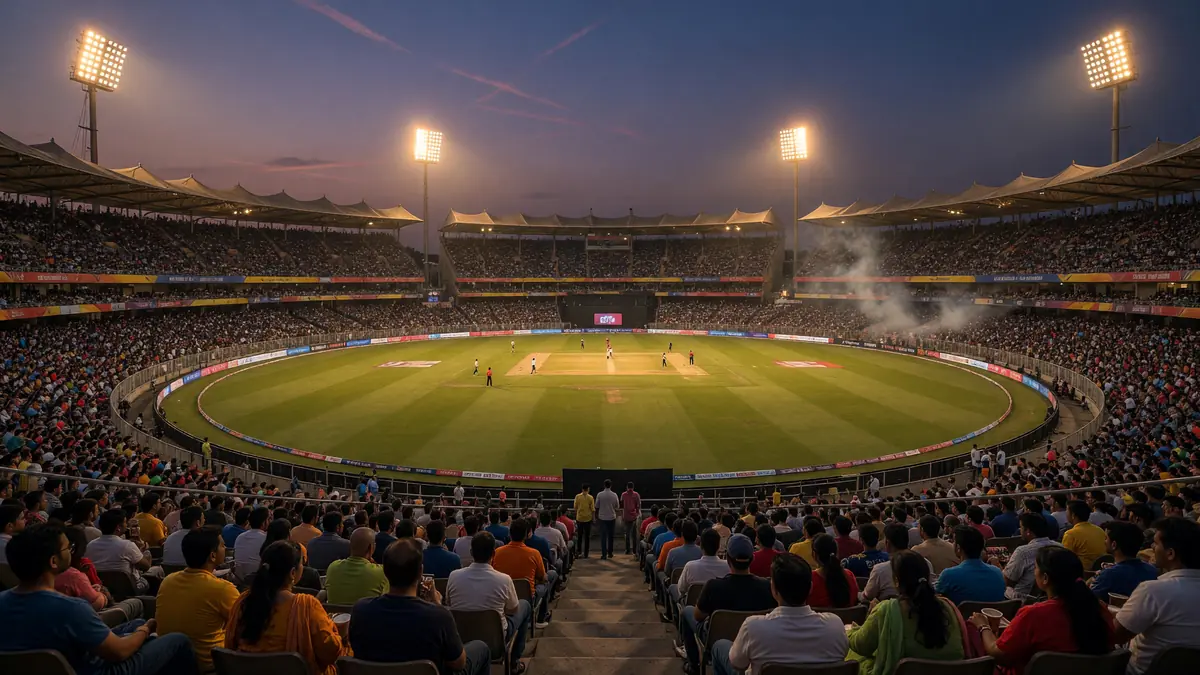
Three markers, not one headline
On 22 July 2026, Vishesh Shrivastav, managing director at Temasek India, told Reuters in Mumbai that the Indian Premier League is a marquee property and that Temasek remains interested, adding the firm would act on the right opportunity. The Reuters-syndicated dispatch, filed by Vibhuti Sharma and edited by Aditya Kalra and Toby Chopra, also restated two valuation anchors that give the interview weight beyond colour.
United Spirits, the Indian arm of Diageo, agreed in March to sell Royal Challengers Bengaluru at a $1.8 billion valuation to a consortium including billionaire David Blitzer’s Bolt Ventures and Blackstone. Separately, U.S. investment bank Houlihan Lokey said the IPL’s valuation climbed to cross $18.5 billion last year. Those two prints — one franchise, one league — are the hard edges of the current ownership market.
This note is not a deal announcement. It is a valuation map for IPL 2026 readers who need to know which figures are confirmed, which are citations, and which still lack a named franchise on the buy side.
The RCB $1.8 billion print
A single franchise sale set a public clearing price other sellers can point to.
The March agreement on Royal Challengers Bengaluru is the cleanest franchise-level marker in the Reuters package. It is an agreed valuation attached to a named club and a named seller group, not a banker’s teaser range. Buyers on future processes will be measured against that band whether they like it or not.
Consortium structure matters as much as the headline number. Bolt Ventures and Blackstone arriving together shows that multi-party capital stacks are already acceptable paths into IPL equity. A later Temasek bid could follow a similar pattern — full control, large minority, or a seat inside a broader group — without contradicting anything Shrivastav said on 22 July.
For season tracking, the RCB print is useful when a second franchise sale lands near the same altitude. One print is an anecdote with weight. Two prints start to look like a corridor. Until a second close appears, treat $1.8 billion as a ceiling reference for top-tier assets, not as a universal ticket price for every club.
Operating continuity after a sale is a separate question. Equity changing hands does not automatically rewrite a bowling attack. Only coaching, auction and retention decisions convert ownership news into fantasy-relevant change. Keep the valuation desk and the match desk on different pages of the notebook.
The $18.5 billion league citation
Houlihan Lokey’s league-level figure explains why scarce franchise equity keeps drawing deep balance sheets.
According to the same Reuters dispatch, Houlihan Lokey said the IPL’s valuation climbed to cross $18.5 billion last year. That is a league enterprise reading, not a cash bid for one shirt. It sits above any single franchise print and helps explain why sovereign funds and private equity accept long diligence cycles.
Readers should not divide $18.5 billion by ten and call the result a fair club price. League value includes central media rights, brand licensing and structural scarcity. Club value still turns on city market, on-field pedigree, local commercial inventory and the specific rights a buyer actually receives.
Used correctly, the league citation is a demand explanation: why Temasek, Blackstone-linked groups and other institutional names bother with cricket equity at all. Used incorrectly, it becomes a fantasy edge myth — as if a larger enterprise value somehow improves a Saturday night captaincy call. It does not.
Pair the citation with the RCB sale rather than stacking them into one inflated story. One number is league-wide. The other is club-specific. Both can be true at once without telling you who opens the batting in Chennai next April.
Keep the layers separate
- $18.5B = league valuation citation (Houlihan Lokey, via Reuters)
- $1.8B = RCB agreed sale valuation (United Spirits, March)
- Neither figure is a Temasek bid
- Neither figure names Temasek’s target club
Temasek’s first public interest
Capacity met confirmation; a named franchise did not.
Shrivastav’s interview is the first time Temasek has publicly confirmed IPL interest, per the Reuters account. The language stayed conditional: marquee property, remain interested, jump on the right opportunity. He declined to name any franchise under evaluation.
That combination is the editorial floor. Confirmed interest is new. A process, a term sheet or a preferred city is not in the source. For capital-markets readers, the interview moves Temasek from silent capacity to stated demand. For IPL 2026 squad trackers, it does not yet move a single role map.
Institutional interest also changes seller leverage. When multiple deep-pocketed groups circle scarce equity, timelines can stretch and asking prices firm up. The responsible reading is to log the demand signal and wait for a counterparty, a filing or a league disclosure before rewriting club notes.
Cross-check this marker against the longer ownership briefing filed the same day under IPL 2026 match research and season tracking. Use one desk for who might buy and another for who might bat.
The $42 billion India book
Temasek’s local exposure shows cheque-size compatibility, not a ring-fenced cricket mandate.
Shrivastav said Temasek’s India portfolio exposure more than quadrupled over the past decade to $42 billion, with continued focus on financial services, consumer and healthcare. Named examples in the dispatch include snacks maker Haldiram’s and Manipal Hospitals.
Those holdings sit closer to consumer brand logic than to pure sports finance, which is exactly why an IPL franchise is a plausible adjacency rather than a random leap. Brand density, mass distribution and long holding periods already exist inside the book. Cricket equity would extend that pattern if terms clear internal tests.
Do not confuse book size with dry powder earmarked for a club. $42 billion is exposure, not a war chest labelled “IPL.” The interview supplies interest and scale. It does not supply a bid ladder, a stake percentage or a closing calendar.
For editors and analysts building a 2026 ownership tracker, the useful cell is simple: Temasek = confirmed interest + large India presence + no named target as of 22 July 2026. Update the cell only when primary paper changes it.
Verified only
How fantasy desks should file the numbers
Ownership markers earn a column; they do not replace XI confirmation.
Build a two-speed file. Speed one holds franchise equity: named buyers, agreed valuations, regulatory notices, board appointments. Speed two holds cricket operations: injuries, impact-player patterns, pitch and dew, toss-dependent roles. Only when speed one spills into speed two — a new owner replacing a head coach, freezing auction budget, or reshaping retention — should the fantasy base case move.
Temasek’s interview, on present evidence, stays in speed one. The RCB sale valuation stays in speed one until operating changes appear. Houlihan Lokey’s league figure is background demand, not a matchup table. Readers who collapse all three into a single “IPL is huge, stake more” story are converting enterprise value into personal risk without an edge.
Responsible limits still apply. League heat is not a reason to raise contest stakes. Keep budgets fixed before the news cycle, and expire any ownership-linked assumption the moment a primary source fails to confirm it.
When a named franchise finally attaches to a buyer group, open a club-specific note: auction leadership, coaching bench, retention philosophy, and any public comments on multi-year roster building. That is the bridge from valuation map to weekly picks.
Holding rules
What would change the map
The next hard facts are names, structures and filings.
Named club
Any confirmed attachment of Temasek — or a rival institutional buyer — to a specific franchise ends the largest ambiguity in the 22 July interview.
Second franchise print
Another agreed valuation near the $1.8 billion RCB mark would thicken price discovery beyond a single sale.
Official paper
Exchange filings, league statements or competition-authority notices outrank secondary chatter every time.
Stake design
Full sale, minority stake or consortium participation changes control risk and the speed of on-field change.
Bench continuity
Coach, captain and auction leadership continuity is the bridge from equity news to fantasy-relevant change.
Silence window
If no named process appears in the near corporate calendar, the interview remains demand without a transaction clock.
Quick answers
Short clarifications tied only to confirmed material.
Is $1.8 billion Temasek’s bid?
No. That figure is the reported agreed valuation on the March Royal Challengers Bengaluru sale by United Spirits to a Bolt Ventures–Blackstone consortium.
Does $18.5 billion mean every club is worth nearly two billion?
No. Houlihan Lokey’s figure is a league valuation citation. Club prices still depend on specific assets and rights.
Did Temasek name a franchise?
No. Shrivastav confirmed interest and declined to name any club under evaluation.
What does the $42 billion figure describe?
Temasek’s India portfolio exposure after a decade of growth, with focus areas including financial services, consumer and healthcare, and examples such as Haldiram’s and Manipal Hospitals.
Should weekly fantasy lineups change on this interview alone?
Not without a named franchise, closed deal or operating-staff change. Roles, venues and XI news still lead.
What is the next fact worth a rewrite?
A named franchise attached to a buyer group, or a second public franchise sale valuation that thickens the price corridor.
File the markers, then return to the XI
When the next ownership filing lands, weigh it beside fixtures, roles and responsible limits — not ahead of them.