Temasek Confirms Interest in IPL Franchises as Investor Race Intensifies
Singapore’s state investor has, for the first time on the record, said it would pursue the right IPL franchise opportunity — a signal that institutional capital is still circling one of world cricket’s most valuable leagues.
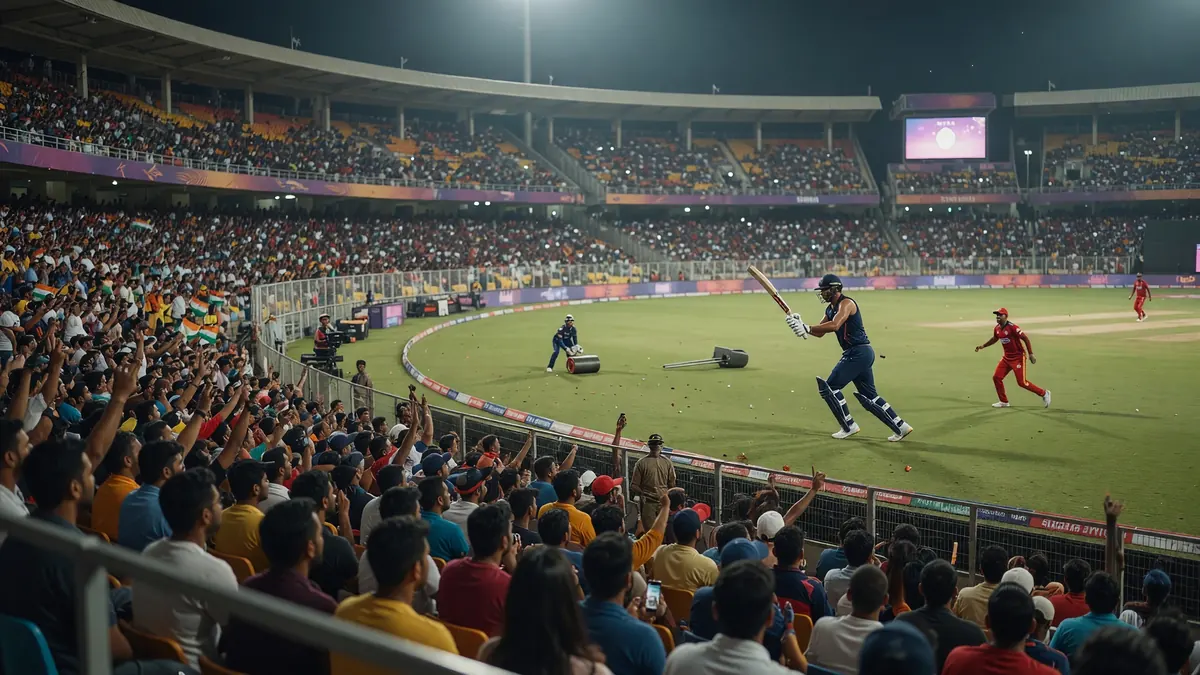
What Temasek said in Mumbai
On 22 July 2026, Vishesh Shrivastav, managing director at Temasek India, told Reuters in Mumbai that the firm is exploring investment opportunities in the Indian Premier League. The comments, carried by Yahoo Finance UK in a Reuters-syndicated dispatch by Vibhuti Sharma and edited by Aditya Kalra and Toby Chopra, mark the first time Temasek has publicly confirmed IPL interest.
“IPL is a marquee property and we remain interested in it,” Shrivastav said. He declined to name any franchise under evaluation. “For the right opportunity, we would jump on it,” he added.
That combination matters as much as the interest itself. The confirmation is public and attributable. The target is not. For ownership desks and fantasy readers tracking squad stability through IPL 2026, the distinction keeps the story in the exploratory lane rather than a completed sale.
Why institutional capital is circling IPL
Franchise demand is no longer limited to film-industry owners and domestic industrial houses.
Reuters framed the shift plainly: the IPL, once associated mainly with Bollywood names and Indian tycoons, is drawing sovereign wealth funds, private equity firms and billionaire investors as media rights and team revenues climb. Temasek’s comments place a Singapore state investor inside that queue rather than on the sidelines.
For IPL 2026 planning, the practical question is not whether capital is interested in principle. It is whether a named franchise changes hands, under what timeline, and whether the operating bench — coaching staff, scouting, auction strategy — stays continuous through the transition. Interest alone does not rewrite a playing XI. A closed deal can.
Shrivastav’s language stayed conditional. “Remain interested” and “right opportunity” are deliberate hedges. They keep Temasek free to walk away if pricing, governance or partner terms fail internal tests. Readers should treat the interview as a demand-side signal, not as evidence that a term sheet has already been signed.
That reading also fits the broader investor race. When multiple deep-pocketed groups compete for scarce franchise equity, sellers gain leverage and timelines can stretch. Until a stock exchange filing, league disclosure or named buyer announcement appears, the responsible editorial position is to log the interest and wait for a counterparty.
Verified markers from the dispatch
The RCB sale as a price anchor
Two major franchise deals this year set the competitive temperature Temasek is entering.
The Reuters report points to a concrete March benchmark: United Spirits, the Indian arm of Diageo, agreed to sell Royal Challengers Bengaluru at a $1.8 billion valuation to a consortium that includes billionaire David Blitzer’s Bolt Ventures and Blackstone. That figure is not a rumour board price. It is a reported agreed valuation on a flagship franchise.
Price anchors change behaviour on both sides of the table. Sellers of other clubs can point to $1.8 billion as proof of what a top-tier IPL asset can clear. Buyers must decide whether to match that band, bid for a smaller stake, or wait for a distressed or partial sale. Temasek’s refusal to name a target leaves open every structure — full control, minority stake, or consortium participation similar to the RCB buyer group.
For fantasy research, ownership transitions matter when they alter auction budgets, retention choices or coaching continuity. A closed $1.8 billion transfer of RCB-scale equity is the kind of event that can eventually show up in roster construction. An unscoped expression of interest from Temasek is not yet that event. Keep the two layers separate when building weekly notes for IPL 2026 match research and season tracking.
The consortium composition on the RCB side also signals who can clear regulatory and capital tests. Private equity names and sports-focused billionaire vehicles are already inside the league’s equity map. A sovereign-linked investor such as Temasek would extend that map further if a deal completes — but again, completion is the missing fact.
League valuation and Temasek’s India book
Two numbers from the same dispatch frame scale: the league’s reported value and Temasek’s local exposure.
According to U.S. investment bank Houlihan Lokey, as cited by Reuters, the IPL’s valuation climbed to cross $18.5 billion last year. That league-level figure sits above any single franchise print and helps explain why sovereign and private-equity balance sheets are willing to underwrite long diligence cycles. Media rights concentration, national television reach and year-round brand licensing all feed the same thesis: IPL equity is scarce and cash-flowing.
Temasek arrives with a large existing India footprint. Shrivastav said portfolio exposure in India more than quadrupled over the past decade to $42 billion. The firm’s continued focus, he indicated, remains financial services, consumer and healthcare. Named examples in the dispatch include snacks maker Haldiram’s and Manipal Hospitals. An IPL franchise would sit adjacent to the consumer and brand-heavy end of that book rather than as a sudden pivot into pure sports finance.
None of those portfolio details prove a cricket deal is imminent. They do show Temasek already operates at a cheque size and holding period compatible with multi-year franchise ownership. Readers should not confuse capacity with commitment. Capacity is documented. Commitment, beyond the interview language, is not.
The editorial floor remains narrow. Confirmed: interest, marquee-property framing, willingness to move on the right opportunity, no named franchise, RCB $1.8 billion March sale context, $18.5 billion league valuation citation, $42 billion India exposure, Haldiram’s and Manipal Hospitals as portfolio examples. Everything else — timing, stake size, preferred city franchise, board seats — is outside the source and stays outside this briefing.
How to read the numbers
- $18.5B is a league valuation citation, not a cash bid for one club.
- $1.8B is a reported franchise sale valuation for RCB, not a Temasek bid.
- $42B is Temasek’s India portfolio exposure, not dry powder ring-fenced for cricket.
- No franchise name was attached to Temasek’s evaluation list.
Ownership noise versus match-week signals
Fantasy lineups still turn on roles, venues and XI confirmation — not on investor interviews.
Capital-markets headlines travel faster than squad sheets. That creates a common research error in peak IPL weeks: elevating an ownership rumour to the same weight as a confirmed batting-order change. Temasek’s interview does not, on present evidence, change who opens at Chepauk, who bowls the nineteenth over in Ahmedabad, or which all-rounder loses overs after a tactical tweak.
Use a two-speed notebook. Speed one tracks franchise equity: named buyers, agreed valuations, regulatory clearances, board appointments, and any official comment from the league or the selling group. Speed two tracks cricket operations: injury bulletins, impact-player patterns, pitch and dew notes, and toss-dependent role maps. Only when speed-one facts spill into speed-two decisions — for example a new ownership group replacing a head coach mid-cycle — should the ownership desk rewrite the fantasy base case.
Until that spillover appears, treat Temasek’s comments as context for why franchise valuations and long-term brand deals keep climbing, not as a reason to reweight a Saturday night captaincy call. The same discipline applies to the RCB transaction: the March valuation is a market fact; any later on-field effect has to be shown through coaching or auction evidence, not assumed from the headline.
Responsible limits still apply. Ownership stories can lure readers into staking more because a league “feels bigger.” League enterprise value is not a personal edge. Keep contest stakes inside a pre-set budget, and expire any ownership-linked assumption the moment a primary source fails to confirm it.
What to watch next
The next hard facts are names, structures and filings — not another restatement of interest.
Named franchise
Any Temasek comment, partner leak that the firm confirms, or seller disclosure that attaches a specific club removes the largest ambiguity in the 22 July interview.
Deal structure
Full sale, minority stake or multi-party consortium changes control risk. The RCB buyer group already showed consortium routes are live in this market.
Official paper
Stock-exchange filings from listed sellers, league statements, or competition-authority notices outrank secondary market chatter.
Operating continuity
Coach, captain and auction leadership continuity is the bridge from equity news to fantasy-relevant change. Watch those appointments after any close.
Valuation band
A second franchise print near the $1.8 billion RCB mark would thicken the price discovery trail Houlihan Lokey’s league figure only sketches.
Silence window
If no named process appears in the coming corporate calendar, the interview remains a demand signal without a transaction clock.
Quick answers
Short clarifications tied only to confirmed material.
Did Temasek announce a purchase?
No. Shrivastav confirmed interest and said Temasek would act on the right opportunity. He did not announce a completed acquisition or name a franchise.
Which IPL team is Temasek evaluating?
That was not disclosed. The managing director declined to name any franchise under evaluation.
What is the RCB figure cited in the same report?
United Spirits agreed in March to sell Royal Challengers Bengaluru at a $1.8 billion valuation to a consortium including David Blitzer’s Bolt Ventures and Blackstone, according to the Reuters dispatch.
How large is the IPL on the valuation cited?
Houlihan Lokey said the IPL’s valuation climbed to cross $18.5 billion last year, as reported by Reuters.
Does this change fantasy picks for the next match?
Not by itself. Without a named franchise, closed deal or operating-staff change, weekly fantasy decisions should still follow confirmed roles, venues and XI news.
What else does Temasek hold in India per the report?
Portfolio exposure was put at $42 billion, with continued focus on financial services, consumer and healthcare, including investments such as Haldiram’s and Manipal Hospitals.
How this briefing should age
Date-stamp ownership claims and replace them when primary paper appears.
This note is tied to a single interview day: 22 July 2026. If Temasek, a franchise seller or the league later publishes a contradictory or more specific position, the newer primary document wins. Do not stretch “remain interested” into a timetable.
For season-long IPL 2026 readers, file the story under capital context. Pair it with fixture lists, squad updates and venue notes when the match week starts. Ownership coverage is useful when it is precise; it is noise when it is projected past the source.
Three holding rules
Stay with verified IPL 2026 inputs
When the next ownership filing lands, weigh it beside fixtures, roles and responsible limits — not ahead of them.