Ajinkya Rahane on the Kohli-Shastri Reset: How Dhoni's Mid-Series Exit Forged India's Fearless Test Mindset
On the Stick to Cricket podcast with Michael Vaughan, Alastair Cook, Phil Tufnell and David "Bumble" Lloyd, Ajinkya Rahane traced the Kohli-Shastri Test era back to a specific December night in Melbourne — and used that moment to explain why India are now losing Test matches even at home.
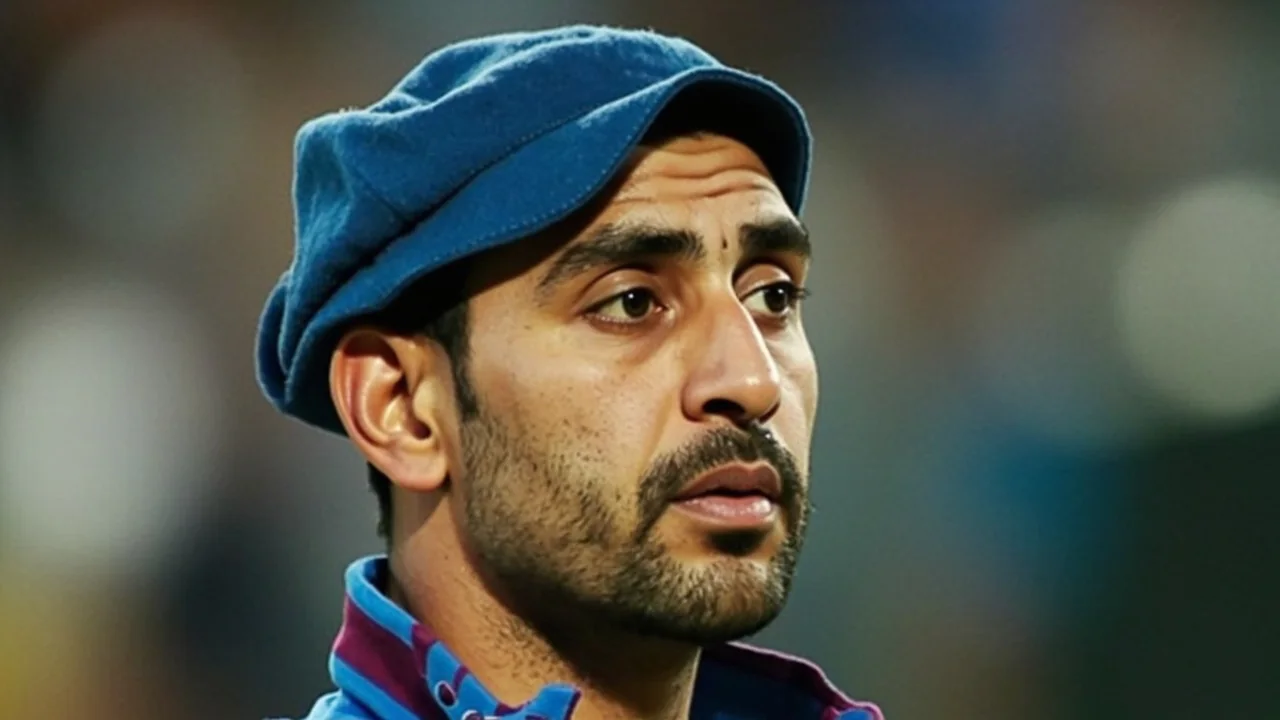
What Rahane actually said, and who he was talking to
Ajinkya Rahane appeared on the "Stick to Cricket" podcast alongside former England captains Michael Vaughan and Sir Alastair Cook, alongside Phil Tufnell and the broadcaster David "Bumble" Lloyd, and used the episode to reflect on the test-cricket shift he lived through as a senior India batter. The verified trigger for his reflection is precise: when MS Dhoni stepped away from Test cricket midway through the 2014-15 Border-Gavaskar Trophy in Australia, Virat Kohli took over the captaincy, Ravi Shastri arrived as head coach, and the dressing-room message changed from reactive to proactive.
That single sentence is the spine of what Rahane was asked about, and what the audience can quote without overstating. He did not say the change was painless, did not claim the new captaincy was universally popular inside the side, and did not deny that early results were uneven. What he said is that Kohli told him, in a team meeting, to "attack from ball one" — a small instruction with a large consequence, because it dissolved the older brief of batting in partnerships and absorbing pressure before scoring.
For fantasy and selection desks following Indian red-ball cricket, the verified facts carry three practical lines. India won historic Test series in Australia under the Kohli-Shastri combination, rose to the No. 1 spot in the ICC Test rankings, and qualified for the inaugural World Test Championship final. Rahane has been out of India's Test setup for the past two years before announcing his international retirement. Those dates and outcomes are not projections; they are the source from which the rest of this briefing draws.
The Melbourne handover: Dhoni steps out, Kohli steps in
One mid-series retirement set the next decade of Indian Test cricket in motion.
The 2014-15 Border-Gavaskar Trophy is the cleanest dividing line in modern Indian Test cricket, and Rahane used the podcast to point straight at it. MS Dhoni retired from the format midway through the series in Australia. Virat Kohli, already the ODI and T20I captain, took charge of the Test side and stayed in the role for the next seven years. Ravi Shastri, who had been a mentor and a voice in the broadcast box through India's previous overseas tours, came in as head coach and stayed through the same stretch.
What makes the handover more than a routine captaincy change is what Rahane says it altered. The older brief — the one he describes as the Dhoni default — was to read conditions, pick moments, and convert pressure into scoreboard control. The Kohli brief, as Rahane experienced it from inside the dressing room, was to set the tempo yourself: "attack from ball one," choose risk before the bowler does, and never let the opposition dictate the rhythm of the session. That difference is not a slogan. It is a selection brief, a field-setting brief, and a length-of-innings brief, and it changed what India looked for in its batters.
The handover also changed how India travelled. Tours that had been treated as survival exercises, especially to Australia, England and South Africa, were reframed as bid-to-win exercises. That change is part of why India's No. 1 Test ranking under the period is the verified fact it is. Without the 2014-15 line, the next four years of overseas series wins and the WTC final slot do not line up in the same ledger.
Verified timeline anchors
The overseas touring blueprint: Australia, England and South Africa
The Kohli-Shastri combination's signature was winning where previous Indian sides had drawn or lost.
Before the handover, India's overseas Test record was a long sequence of respectable draws, narrow losses, and the occasional famous win. After the handover, the same touring cycle turned into a sequence of series wins. Rahane was inside that run as a senior middle-order batter, and the podcast episode is partly his eyewitness account of how the dressing room stopped treating an away series as a damage limitation exercise and started treating it as one to win outright.
The series that anchor the run are familiar: Australia 2018-19, where India won their first Test series Down Under; South Africa 2018, where India won their first series there; England 2021, where India came from behind to take the series at The Oval; and the away tours that bracketed those wins. The WTC qualification followed naturally, because the same combination had spent enough time at the top of the rankings to book a place in the first final at Lord's in 2021.
The honest side of that record is also part of what Rahane was reflecting on. The same dressing-room message that won India overseas is the one he now worries is missing at home. The contract that "attack from ball one" sets with a young player is the same contract that produces a flat low-scoring home Test when the conditions demand patience. That tension — between the touring brief and the home brief — is the hinge of his current concern, and the rest of this briefing maps it.
"Attack from ball one": the dressing-room reframe
The instruction Rahane remembers was short, but it rewrote selection, field settings and run rates overnight.
The exact phrase that Rahane put on the record is the one that travels furthest in the briefing. Kohli told him, in a team meeting, to attack from ball one. That is not a batting tip. It is a franchise-wide signal. Once the captain is on record asking for that, the coach builds sessions around it, the selectors reward it in the XI, and the field placements are set by it. Every other choice in the dressing room falls in line behind that one instruction.
For a batter like Rahane, who had built his reputation as a patient accumulator with a particular fondness for the off side and the leave, the new brief was a genuine adjustment. The early evidence of the adjustment shows up in his strike rate, in the way he counter-attacked when a bowler overpitched on the fourth day, and in his comfort with a more aggressive running game between the wickets. It also shows up in the broader Indian order: if Rahane is asked to attack from ball one, then the batters below him are free to do the same, and the lower-middle order can play through rather than for containment.
The reason this briefing returns to the phrase is that it has a real-time echo. India's current dressing room has plenty of players who grew up watching that era, but the brief was authored by one captain and one head coach. When that pair is no longer at the centre, the brief loses its automatic backing and the next captain has to re-author it inside the team meeting. That is the practical job Rahane was describing, and it is also the gap he is now flagging from the outside.
What "attack from ball one" rewrote
- Pre-series squad picks were reset to favour tempo-setters over anchors.
- Middle-session run rates climbed; declarations came earlier; bowlers had more time.
- Field placements opened up in the first ten overs of every innings.
- Lower-order batting depth became a frontline selection criterion.
- Overseas tours were briefed as bid-to-win rather than survive-to-draw.
What Rahane's own role inside that era meant
The veteran middle-order batter turned senior lieutenant, and his later career tells us how that brief ages.
Rahane is the right person to make this argument because he was the player the brief was hardest on. He had built a Test career on patience, on the leave, on batting long. The Kohli brief did not erase that skill set, but it asked him to use it differently: to start positively rather than passively, to take on the short ball when the moment called for it, and to be the senior voice in the middle order when the new captain needed an old head next to him. He played all four of those roles across the Australia 2018-19, England 2021 and the WTC final.
His absence from the Test setup is the second verified fact that frames the current conversation. Rahane has been out of the India Test side for the past two years before announcing his international retirement. That sentence matters because it pins the conversation to a player who is no longer in the dressing room and is therefore describing what he saw rather than what he is selling. He is not selling a comeback, he is not angling for a selectorial job, and he is not relitigating the Ajinkya-Ranji phase of his career. He is talking about a phase of Indian Test cricket he lived through and would like to see returned to.
For fantasy and selection readers, the same fact is a small data point. Senior middle-order batters who are comfortable attacking the new ball are scarce in any era, and Rahane's later career shows how the brief ages. When the body slows down, the aggressive brief becomes harder to execute; when the team enters a transition, the senior voice goes first. The trade-off is built in, and the era won its overseas series despite paying it.
What worries Rahane about India today
Two specific gaps, named clearly on the podcast, and a wider argument about patience at home.
The current side of Rahane's argument is the part that the briefing should hold most carefully, because it is the part that is closest to verifiable fact and farthest from prediction. He expressed concern that India are now losing Test matches even at home, and he said modern cricketers lack the patience to play out tough sessions. Both statements are rooted in the same problem — the contract the Kohli era signed was excellent at winning overseas, and the cost of paying it shows up in the conditions where the brief was never the default.
The away record held because the dressing-room permission to attack from ball one was a literal advantage overseas. India batted first on green English tracks, made first-innings scores that the home sides could not match, and forced captains into the kind of fourth-innings chases the touring batters had trained for. At home, on dry, slower tracks, where the touring side is already pinned deep and patience is the variable, the same brief produces flat, low-scoring sessions where India go from a strong position to a struggling one in a single afternoon.
The patience point is the older argument underneath it. Test innings at home, particularly in the second and fourth innings, are won by the side that can leave well, leave often, and wait for the bad ball without pre-meditating aggression. The Kohli-Shastri era went overseas and won; the next generation has spent ten years rehearsing the overseas brief and forgetting the home one. That is what Rahane was gently describing on the podcast, and it is the part of his reflection that does not need embellishment.
Selection implications for the current Test squad
Read Rahane's reflection as a brief on batting depth, fifth-bowler balance and middle-order temperament.
Translate Rahane's podcast into a current selection read and three practical notes fall out. First, batting depth. The Kohli era's overseas touring required the XI to contain at least three batters who could attack the new ball; the home era, by contrast, is asking for one batter at six or seven who can bat through. Squads that staff both briefs need both profiles, and the gap Rahane is naming is the absence of the second profile in the modern dressing room.
Second, the fifth bowler. A team briefed to attack from ball one overseas needs a fifth bowler who can hold an end for a long spell, because the captain cannot afford to over-bowl the four frontline options on a flat track. At home, on dry, turning tracks, the fifth bowler is more often a part-time spinner and the squad's seam depth shrinks. The two briefs ask different things of the bowling unit, and India have historically had to choose between them at selection meetings.
Third, captaincy language. The "attack from ball one" line is a captain's line. It gets written into team meetings, into net sessions, into post-play chats. When the captain changes, the line has to be re-issued or the dressing room falls back on its default. Rahane's reflection is, in part, an observation about whose voice the dressing room is hearing now that the original authors have moved on. That is not a criticism of the current captain; it is a description of how briefs are inherited, kept or lost.
Three selection reads
What to watch next
Three updates will tell readers whether the next Test cycle picks up the home-side brief Rahane is asking for.
Home Test team sheets
Whether India name a sixth-spinner option on dry tracks in the next home cycle is the cleanest read on whether the home brief is being staffed.
Middle-order tempo
Run rates in the first thirty overs of a home innings are the simplest indicator of whether the dressing room is still running on the overseas brief.
Captain's pre-match comment
The captain's pre-match press note often hints at the brief. Listen for "patience," "leave well," "bat time" — language that signals the home contract is being re-issued.
WTC table movement
India's standing in the current WTC cycle shows whether the brief change is producing the away wins it was designed to, or whether home losses are starting to drag.
Selectorial messaging
Whether the chairman of selectors names an anchor-type batter as a non-negotiable pick tells readers whether the squad is being built to hold both briefs at once.
Coaching room
The head coach's press comments after a home Test win or loss are where the brief is most visibly re-issued. Watch for who sets the framing.
Quick answers
Short clarifications tied only to the verified material in this briefing.
What did Ajinkya Rahane say about Virat Kohli and Ravi Shastri?
Rahane said that when MS Dhoni retired from Test cricket midway through the 2014-15 Border-Gavaskar Trophy in Australia, captain Virat Kohli and head coach Ravi Shastri transformed Indian cricket's mindset into a fearless, aggressive and proactive Test side, especially overseas.
Where did Rahane make the comments?
He made them on the "Stick to Cricket" podcast alongside Michael Vaughan, Sir Alastair Cook, Phil Tufnell and David "Bumble" Lloyd.
What did Kohli tell Rahane directly?
According to Rahane's account, Kohli told him to attack from ball one and gave the players the confidence to play fearlessly.
When did MS Dhoni retire from Test cricket?
Dhoni retired from Test cricket midway through the 2014-15 Border-Gavaskar Trophy in Australia, after which Virat Kohli took over the Test captaincy.
What did India win under Kohli and Shastri in Tests?
Under Kohli and Shastri, India won historic Test series in Australia, rose to the No. 1 spot in the ICC Test rankings and qualified for the inaugural World Test Championship final.
Is Rahane still in India's Test setup?
No. Rahane has been out of India's Test setup for the past two years before announcing his international retirement.
What worries Rahane about India now?
Rahane expressed concern that India are now losing Test matches even at home and said modern cricketers lack the patience to play out tough sessions.
What is the selection implication of his argument?
Read as a selection brief, his reflection asks for batting depth at six or seven, a fifth-bowler balance between overseas and home conditions, and a clear re-issue of the team-meeting instruction.
How this briefing should age
Treat the podcast reflection as a single-news-day record, not as a permanent brief.
This briefing is tied to a single news event: the "Stick to Cricket" podcast episode featuring Ajinkya Rahane, Michael Vaughan, Alastair Cook, Phil Tufnell and David Lloyd, drawn from the Times of India dispatch of 5 August 2026. If Rahane, the BCCI, the Indian coaching staff or any player later publishes a contradictory or more specific read on the Kohli-Shastri era or on India's current Test form, the newer primary document wins. Do not extend "attack from ball one" into a permanent team brief, and do not flatten his home-side worry into a permanent diagnosis.
For readers following Indian Test cricket, file the story under player availability, role shape and selection logic. Pair it with captaincy, venue and pitch notes for the next home Test cycle. Availability coverage is useful when it is precise; it is noise when it is projected past the source. The verified facts above come from the Times of India dispatch, and any addition beyond them has no claim to belong on the player desk.
For readers following the wider selection conversation, the player roles and selection notes desk covers verified role, fitness and workload shifts across formats. Use it to keep both the historical brief and the live one in view without letting one overwrite the other.
Three holding rules
Stay with verified Indian Test availability
When the next team sheet lands, weigh it beside conditions, roles and responsible limits — not ahead of them.